Flying Termites (Alates) in Adelaide: What a Swarm Means
Flying termites adelaide homeowners spot after rain are alates, a reproductive swarm signalling a mature nest nearby that needs an inspection now.
Key takeaways
- Flying termites (alates) are reproductive swarmers leaving an established nest to start a new colony, not a random one-off pest event.
- A swarm inside or right beside an Adelaide home usually means the parent colony is already mature and close by, often within the walls or subfloor.
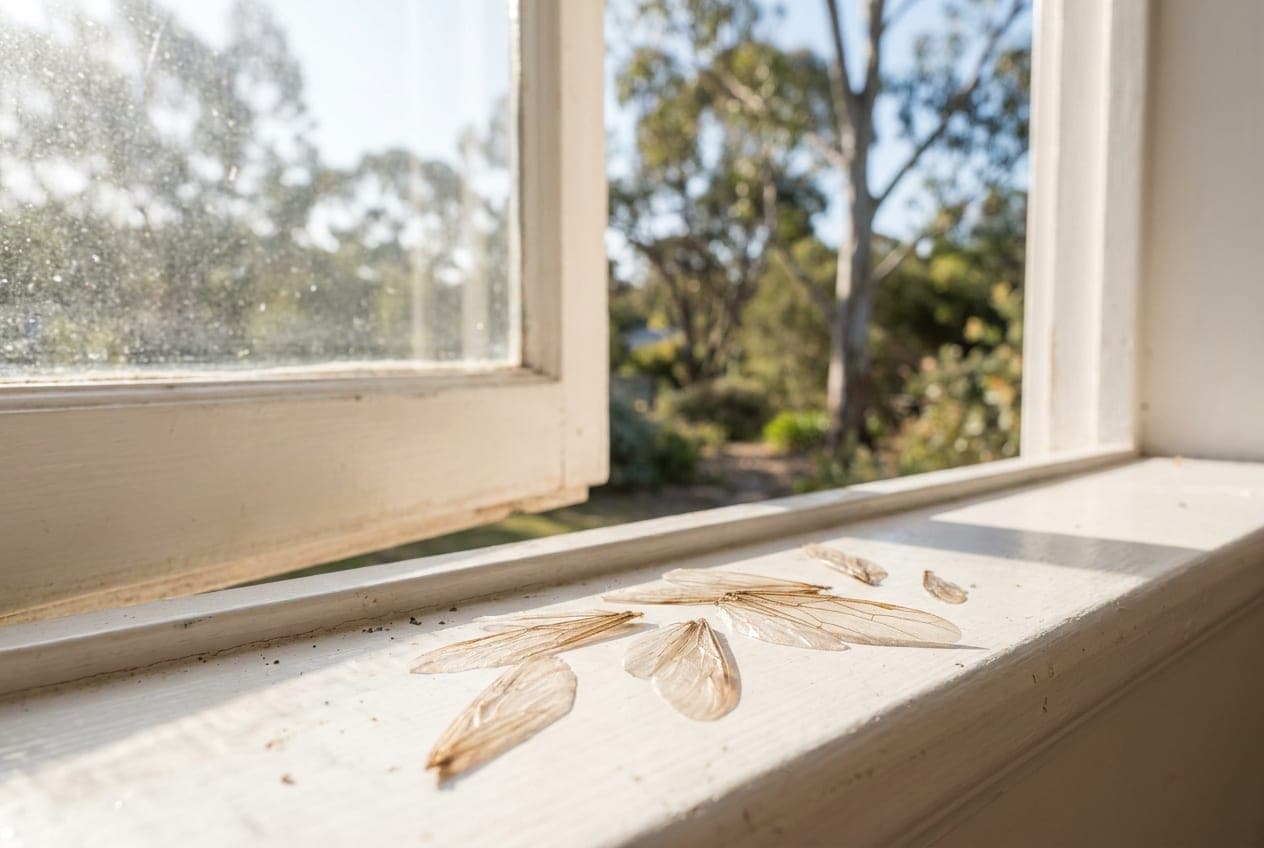
- Discarded, evenly-shaped wings on windowsills are often the only evidence left once a swarm has passed, and they are just as diagnostic as the swarm itself.
- Swarms cluster around the first substantial autumn rain after warm weather, which in Adelaide typically means a spike from March into May.
- A swarm is not an emergency to spray yourself. It is a strong reason to book a licensed inspection within the week.
Flying termites in Adelaide are winged reproductive termites (alates) leaving a mature colony to found a new one, and their appearance, especially indoors or right beside your foundations, means an established nest is already close by. It is one of the clearest visual signs of termite activity a homeowner will ever get, and it deserves a prompt inspection rather than a wait-and-see approach.
What flying termites actually are
Termite colonies produce winged reproductives once they reach a certain size and maturity, usually several years after the nest is founded. These alates leave the colony in a synchronised swarm, mate, shed their wings, and attempt to start new colonies elsewhere. It is a numbers game: most alates die or get eaten within hours, but it only takes one successful pair to establish a new nest in a neighbouring wall cavity, stump or garden bed.
Seeing a swarm is not a random pest encounter. It is the colony broadcasting its own presence and maturity. A colony large enough to swarm has typically been established for 3 to 5 years, which is a detail a lot of Adelaide homeowners do not realise until a technician explains it during an inspection.
Flying termites vs flying ants: the mistake we see constantly
This is the single most common misidentification we come across on inspections across Adelaide's older bungalow belts, from Unley through to Prospect and Woodville. Flying ants are common in South Australian gardens and are frequently swarming at the same time of year as termites, which causes a lot of unnecessary panic, and occasionally the opposite: dismissing a genuine termite swarm as "just ants."
The reliable differences:
- Waist: termites have a thick, straight waist; ants have an obvious pinch.
- Antennae: termites have straight, beaded antennae; ants have bent, elbowed antennae.
- Wings: termite alates have two pairs of wings of equal length and shape, much longer than the body; ants have two pairs of unequal length.
- Wing shedding: termite wings snap off cleanly at a weak seam near the base and are left in neat piles; ant wings tend to stay attached longer.
If you are staring at a pile of near-identical, translucent wings on a windowsill with no ants attached, that is a strong termite indicator. For a broader rundown of what else to look for, see 12 Signs You Have Termites (and What to Do Next).
Why the location of the swarm matters more than the swarm itself
A lot of general pest advice treats a termite swarm as one uniform warning sign. In practice, where the swarm happens changes the risk picture significantly, and this is the part that generic checklists usually skip.
A swarm emerging from a tree stump at the back of the yard, a retaining wall, or a neighbour's property is worth noting but is a lower-urgency signal. Termites are opportunistic and a swarm nearby does not necessarily mean your house is compromised yet.
A swarm emerging from inside the house, from a skirting board, an architrave, a light fitting, or around a window frame is a different situation entirely. That means the parent colony is not nearby, it is inside your structure. In our experience across Adelaide's older housing stock, particularly weatherboard and double-brick homes built before the 1980s in the western and inner suburbs, an indoor swarm has almost always coincided with a colony already active in wall cavities or subfloor timber by the time the technician arrives.
Why Adelaide's climate makes March to May the key window
Termite swarming is triggered by warmth and humidity, usually the first decent rain event after a hot, dry summer. Adelaide's Mediterranean climate, hot dry summers followed by autumn rain, creates a fairly predictable swarming window from March into May, with some activity also possible in spring. This is worth building into your own seasonal awareness rather than only thinking about termites when you spot a problem. For a fuller seasonal breakdown, see Termite Season in Adelaide: When They Are Most Active.
One quirk we notice locally: homes with north or west-facing subfloor vents in suburbs like Modbury or Golden Grove, where clay soil holds moisture longer after rain, tend to see swarming activity slightly earlier in the season than sandier coastal suburbs. It is not something you will find in a general pest guide, but it lines up with what soil scientists know about moisture retention in South Australian clay subsoils. The CSIRO's guidance on termite biology and building protection standards (through Standards Australia's AS 3660 series) both point to moisture and timber-to-ground contact as the two biggest drivers of colony establishment, which tracks with what we see on the ground.
What to do (and not do) when you see a swarm
The instinct to grab a can of insect spray is understandable but counterproductive. Spraying scatters survivors, drives the colony deeper into the structure, and destroys the visual trail a technician would otherwise use to help locate the nest.
Instead:
- Note exactly where you saw the swarm or the discarded wings (which room, which wall, near which window).
- Avoid disturbing the area further. Vacuuming up dead insects and wings is fine; spraying chemicals into the gap they emerged from is not.
- Photograph the wings or insects if you can, for reference.
- Book an inspection promptly rather than waiting for a second swarm to confirm it.
If you want a faster first read on whether what you are seeing matches termite activity, the Do I have termites? checker is a useful next step before you book anyone out.
What happens at the inspection
A licensed technician will assess the swarm location, check adjoining subfloor and roof void access points, and use moisture meters or a termite detection tool to narrow down where the colony is likely established. If activity is confirmed, the technician will talk you through the treatment options suited to your construction type and the colony's location, whether that is a chemical soil barrier, a baiting system, or a combination.
We connect Adelaide homeowners with licensed, vetted local technicians for exactly this kind of assessment. You will not get a generic call centre script, you will get matched with someone who inspects the specific signs you found and gives you a straight answer on whether it warrants termite treatment.
The bottom line on flying termites
A termite swarm is not something to shrug off, but it is also not a reason to panic and start spraying. It is the clearest signal a mature colony gives before it does structural damage you can see. Adelaide's autumn swarming window makes March through May the period to be most alert, but any swarm, at any time of year, in any suburb, deserves a proper look. Getting an inspection booked while the evidence (wings, insects, location) is still fresh gives the licensed technician the best chance of finding the nest quickly rather than chasing it after the trail has gone cold.
Ready to get quotes from licensed technicians?
Tell us about your problem and we match you with a vetted local operator. Free, no obligation.
Get free quotesFrequently asked questions
No, and mixing them up is the most common mistake we see. Termite alates have two pairs of wings of equal length, a thick waist and straight beaded antennae. Flying ants have a pinched waist, bent antennae and a longer front wing pair. If you are unsure, a licensed technician can identify a sample or a photo quickly.
Not always. Termites can swarm from a nest in a nearby tree stump, retaining wall or neighbouring property and simply be attracted to your lights. But a swarm emerging from inside your walls, skirting boards or subfloor is a direct sign the colony is already established in your home, which is why the location of the swarm matters more than the swarm itself.
Avoid spraying the swarmers with household insect spray or disturbing the area. This can scatter the colony and make it harder for a technician to trace the nest. Vacuum up the dead insects and shed wings if you want to tidy up, note where you saw them, and book an inspection.
Adelaide's swarming activity tends to peak from March through May, triggered by warm, humid conditions after rain following a dry summer. Some swarming can also occur in spring. Activity varies by species and by season, so any swarm outside these windows still warrants attention.