Hollow-Sounding Timber and Other Early Warning Signs
Hollow timber usually means termites have hollowed out the wood from inside. Learn what to tap, what it sounds like, and what Adelaide homeowners should do next.
Key takeaways
- A dull, papery or hollow sound when you tap timber usually means termites have eaten the wood from the inside out, leaving only a thin veneer behind.
- Skirting boards, architraves, door frames and stumps are the most common places to test in an Adelaide home.
- Hollow timber is a late-stage sign. By the time you can hear it, the damage inside has usually been progressing for months or longer.
- A screwdriver test and a professional inspection both matter. Do not disturb the area more than necessary, since disturbing a colony can just send it elsewhere in the house.
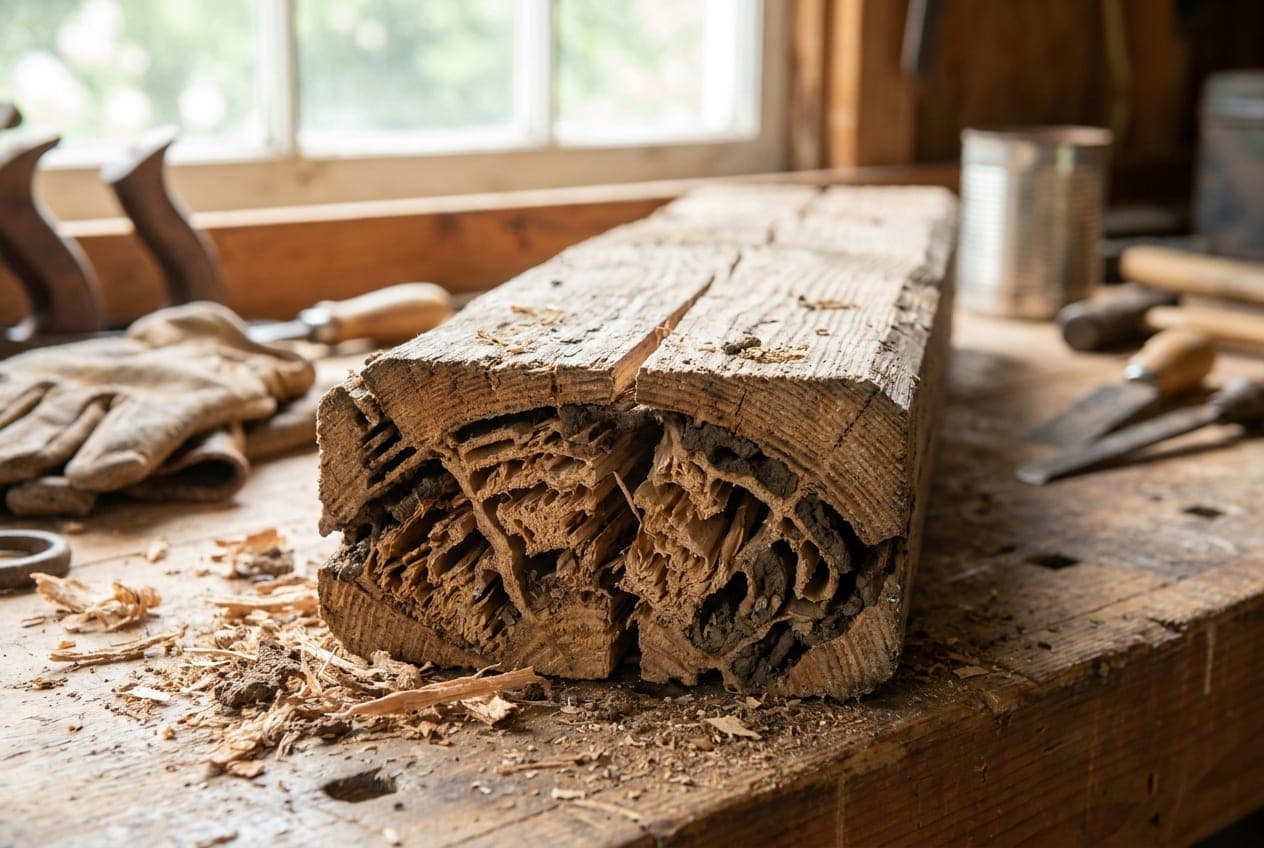
Hollow-sounding timber almost always means termites have eaten the wood from the inside, leaving a thin, damaged shell that no longer rings solid when tapped. It is one of the clearest physical signs of an active or recent infestation, and it usually means the damage has been building for some time before anyone noticed. If a skirting board, door frame or stump sounds papery or dull rather than solid, it is worth investigating properly rather than waiting.
Why termites hollow out timber instead of eating it visibly
Termites feed on the cellulose inside timber, working along the grain and avoiding the painted or varnished surface wherever possible. That surface layer stays intact because it protects the colony from light, air and predators while they continue feeding underneath. The result is timber that looks completely normal from the outside but has been reduced to a maze of galleries and thin walls inside. This is exactly why hollow-sounding timber is such a useful, low-effort check: your eyes can be fooled by an intact paint job, but your ears (and a light tap) usually cannot. For background on how these galleries form and how termite colonies operate, the CSIRO's pest information resources are a solid, non-commercial reference point.
Where to check first in an Adelaide home
Not every piece of timber in a house is equally at risk, and knowing where to focus saves a lot of time.
Skirting boards and architraves
These sit low to the ground and close to slab edges or subfloor timber, which is exactly where subterranean termites enter a structure. Adelaide's clay-heavy soils in suburbs like Blackwood, Mitcham and parts of the Adelaide Hills expand and contract more than sandier coastal soils, and that movement often opens up hairline gaps around slab edges that termites exploit without leaving obvious external clues.
Door frames and window frames
Frames are structural timber that termites will hollow steadily while leaving paint or varnish untouched. A door that has started sticking slightly, alongside a duller sound when tapped, is a combination worth acting on.
Stumps and bearers in older homes
Adelaide has a large stock of homes built from the 1900s through the 1970s on timber stumps rather than slab, particularly in inner suburbs like Unley, Norwood and Prospect. These stumps sit in ongoing contact with soil moisture and are a classic hollowing point. If you can get under the house safely, a tap test on stumps and bearers is worth doing every year, not just when something feels off. For anyone unsure whether their own suburb carries elevated risk, Termites in Adelaide: Which Suburbs and Homes Are Most at Risk breaks this down by soil type and housing age.
How to actually do the tap test
The method is simple, but doing it properly matters.
- Use a solid object, the back of a screwdriver handle or a knuckle, and tap firmly along a length of timber at regular intervals.
- Listen for a change from a solid, sharp sound to something duller, flatter or more hollow.
- If a section sounds different, follow up with a gentle screwdriver probe. If the tip sinks in with little resistance or the surface flakes away, stop probing further.
- Note the location and extent, then arrange a proper inspection rather than opening the timber up yourself.
This last point matters more than people expect. Disturbing an active gallery can cause the colony to retreat and relocate within the structure, which makes it harder to track and treat effectively. For a fuller explanation of why probing further is counterproductive, see Found Termites? What NOT to Do (Do Not Disturb the Nest).
What a hollow sound is actually telling you
A hollow sound is a lagging indicator, not an early one. Termites can spend a year or more feeding through a structural member before the hollowing becomes obvious enough to hear from a simple tap test. That means if you have found one, it is reasonable to assume feeding has been underway for a meaningful stretch of time, and it is worth checking whether the damage has spread to load-bearing elements nearby. It is also worth ruling out look-alikes: old dry rot and some borer damage can produce a similar dull sound, though the internal pattern (smooth, grain-following galleries for termites versus more irregular decay for rot) is usually distinguishable on close inspection. This is one reason a professional check matters more here than with some of the milder early signs covered in 12 Signs You Have Termites (and What to Do Next).
If you want a broader visual sense of what confirmed damage looks like once timber is opened up, What Does Termite Damage Look Like? covers the visual patterns technicians look for beyond just the sound test.
What happens after you find hollow timber
Once hollow timber is confirmed or strongly suspected, the next sensible step is a proper inspection rather than DIY treatment. A licensed technician can assess how far feeding has spread, check for a live colony versus old damage, and identify entry points that a homeowner is unlikely to spot without training, such as termite activity behind wall cavities or under slab edges. We connect Adelaide homeowners with licensed, vetted technicians who carry out these inspections and can recommend the right next step, whether that is a termite treatment or ongoing monitoring.
Standards Australia's guidance on termite management (AS 3660) sets the framework licensed technicians in South Australia work to, covering everything from barrier systems to inspection frequency, and is a useful independent reference if you want to understand the standard your technician should be meeting.
The bottom line
Hollow-sounding timber is one of the more reliable physical signs of termite activity because it is hard to fake and easy to test. It is also a sign that feeding has likely been underway for a while, so treat it as a prompt to act within days rather than something to monitor for a season. A simple tap test across skirting boards, frames and stumps takes minutes, and following up with the licensed technician we match you with turns a suspicion into a clear answer.
Ready to get quotes from licensed technicians?
Tell us about your problem and we match you with a vetted local operator. Free, no obligation.
Get free quotesFrequently asked questions
Not always. Old dry rot, borer damage or water-softened wood can also sound hollow when tapped. The reliable way to tell the difference is a licensed inspection, since termite damage tends to follow the grain in smooth galleries while rot and borer damage look different under close inspection.
A healthy skirting board or frame gives a solid, slightly sharp knock. Timber that has been hollowed out by termites sounds dull, flat or papery, almost like tapping a cardboard box rather than solid wood.
A gentle probe with a flat screwdriver or similar tool is a reasonable first check. If the tip sinks in easily or the surface crumbles, stop there and get a licensed technician to assess it properly rather than digging further, since breaking open a gallery can scatter the colony before it can be treated.
It is not something to leave. Hollow timber means active or very recent termite feeding has already compromised the wood's strength, so structural risk is real, particularly around load-bearing frames and stumps. Booking an inspection within days, not months, is the sensible approach.