How to Prevent Termites in Your Adelaide Home
A practical guide to preventing termites in your Adelaide home: manage moisture, keep timber and mulch clear of the walls, ventilate subfloors and get annual checks.
Key takeaways
- Termites need moisture, so fixing leaks, drainage and subfloor damp is the single most effective prevention step.
- Keep timber, mulch and garden beds clear of direct contact with the walls and slab edge.
- A professional barrier or bait system plus an annual check is the only reliable long-term protection.
- Prevention is far cheaper than treating an established infestation and the damage it causes.
The best way to prevent termites in your Adelaide home is to take away the two things they need: moisture and easy access to timber. That means fixing leaks and drainage, ventilating the subfloor, keeping mulch and garden beds clear of the walls, and then backing it up with professional protection, a barrier or bait system with an annual check. Prevention is dramatically cheaper than treating an established colony and repairing the damage it leaves.
Adelaide Pest Treatment is a referral service that connects you with licensed local technicians. This guide covers what you can do yourself and where professional termite control takes over.
Manage moisture first
If you do one thing, make it moisture. Termites are drawn to damp, and most Adelaide infestations trace back to a moisture source: a leaking hot-water service, poor drainage that pools against the footing, a dripping air-conditioning outlet, or a poorly ventilated subfloor. Walk your home and fix these. The link between water and termites is strong enough that we gave it its own guide: moisture, drainage and termites.
Practical moisture steps:
- Repair leaking taps, pipes and hot-water services promptly
- Direct downpipes and drainage away from the footing
- Improve subfloor ventilation on stumped and older homes
- Keep the air-conditioning condensate outlet clear of the wall
Keep timber and mulch off the walls
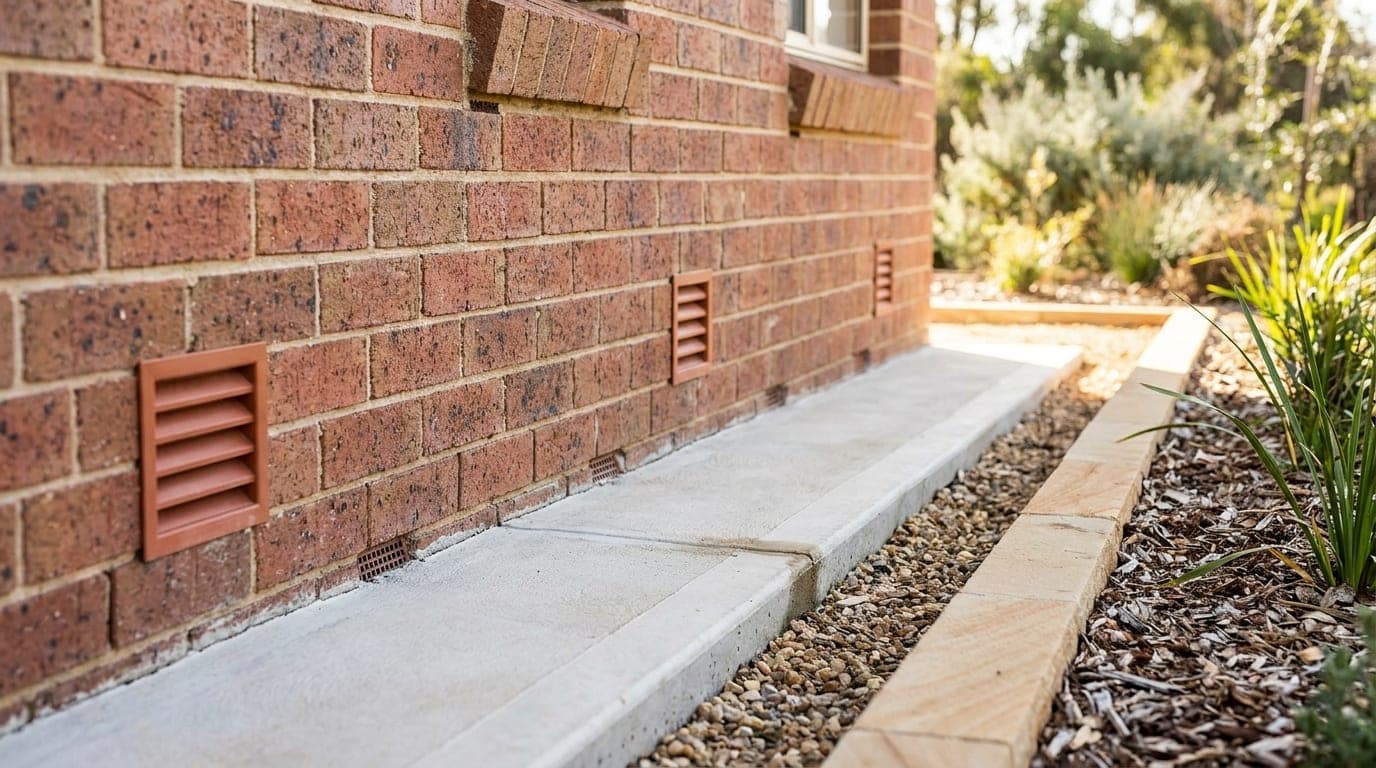
Termites want a path from the soil to the timber of your home. Do not give them a bridge. Keep garden beds, mulch, soil and stored timber clear of direct contact with the walls and slab edge, and maintain a visible inspection gap so any mud lead is easy to spot. Store firewood and offcuts away from the house, not stacked against it. Timber retaining sleepers and old stumps in the garden are quiet feeding sites that keep colony pressure high near the home.
Do not bury the weep holes
A specific Adelaide point: on brick homes, raising garden beds, paving or soil above the weep holes and the slab edge both traps moisture and hides the very zone a technician needs to inspect and treat. It is one of the most common conducive conditions found on local homes. Keep the slab edge and weep holes exposed.
Add professional protection
Good housekeeping lowers your risk, but it does not replace a physical or chemical barrier between the soil and your home. This is the part you cannot do yourself. A licensed technician installs a chemical barrier or a monitored bait system suited to your home, and the method selector gives you a starting idea of which fits. On a new build or major renovation, reticulation is the most cost-effective long-term option.
Book the annual check
Prevention is not a one-off. A barrier only protects while it stays intact, and building work, landscaping or a new deck can breach it. An annual professional check is the cheapest insurance there is: it catches new activity or a breach while the problem is still small. Higher-risk homes, near reserves, on the bushland fringe, or in the Adelaide Hills, benefit from staying especially on top of this.
Start protecting your home
Tell us about your home and we will connect you with a licensed local technician to set up prevention and protection that actually lasts. No obligation, and we never sell your details.
Ready to get quotes from licensed technicians?
Tell us about your problem and we match you with a vetted local operator. Free, no obligation.
Get free quotesFrequently asked questions
Manage moisture and remove easy access to timber. Fix leaks and drainage, ventilate the subfloor, keep mulch and garden beds off the walls, and store firewood away from the house. Then add professional protection: a barrier or bait system with annual checks.
You can reduce the risk with good moisture and timber management, and it genuinely helps. But you cannot install a chemical barrier or a monitored bait system yourself, and those are what provide reliable long-term protection. The two work best together.
At least once a year in Adelaide, and more often for higher-risk homes near reserves or in the Hills. An annual professional check catches new activity or a breached barrier early, while it is still cheap to deal with.
Mulch itself is not the enemy, but mulch piled against the wall or slab edge holds moisture and hides termite access, which raises the risk. Keep a clear inspection gap between mulch or garden beds and the building.