Is Termite Treatment Safe for Kids and Pets?
Is termite treatment safe around children and pets in your Adelaide home? What the products are, where they go, re-entry times and the low-tox options that use less chemical.
Key takeaways
- Modern termite treatments are applied to the soil and to sealed bait stations, not to your living areas, so day-to-day exposure for kids and pets is low.
- A licensed technician will tell you the exact product used and any short re-entry or drying time to keep clear of.
- Baiting uses a fraction of the chemical of a soil barrier and keeps it inside tamper-resistant stations, so it is often the first choice for pet-conscious homes.
- The real risk to pets is disturbing a treated zone or bait station, not the treatment itself, so follow the technician's placement advice.
Yes, termite treatment is safe for kids and pets in the vast majority of Adelaide homes, because the products go into the soil around and under the building or into sealed bait stations, not onto the surfaces your family touches. The modern termiticides and growth-regulator baits used today are low-toxicity in the way they are applied, and a licensed technician will explain exactly what is used and any short precautions to follow.
Adelaide Pest Treatment is a referral service. We do not perform treatment: we connect you with licensed, insured local technicians who do, and who can answer safety questions for your specific home. Here is what actually matters for a household with children or pets.
Where the treatment actually goes
The safety picture makes a lot more sense once you know where the product ends up. A chemical soil barrier is a treated zone in the soil around the perimeter and under the slab. It is below ground and around the outside of the home, not sprayed through your living areas. Foraging termites pick it up as they move through the soil and carry it back to the colony.
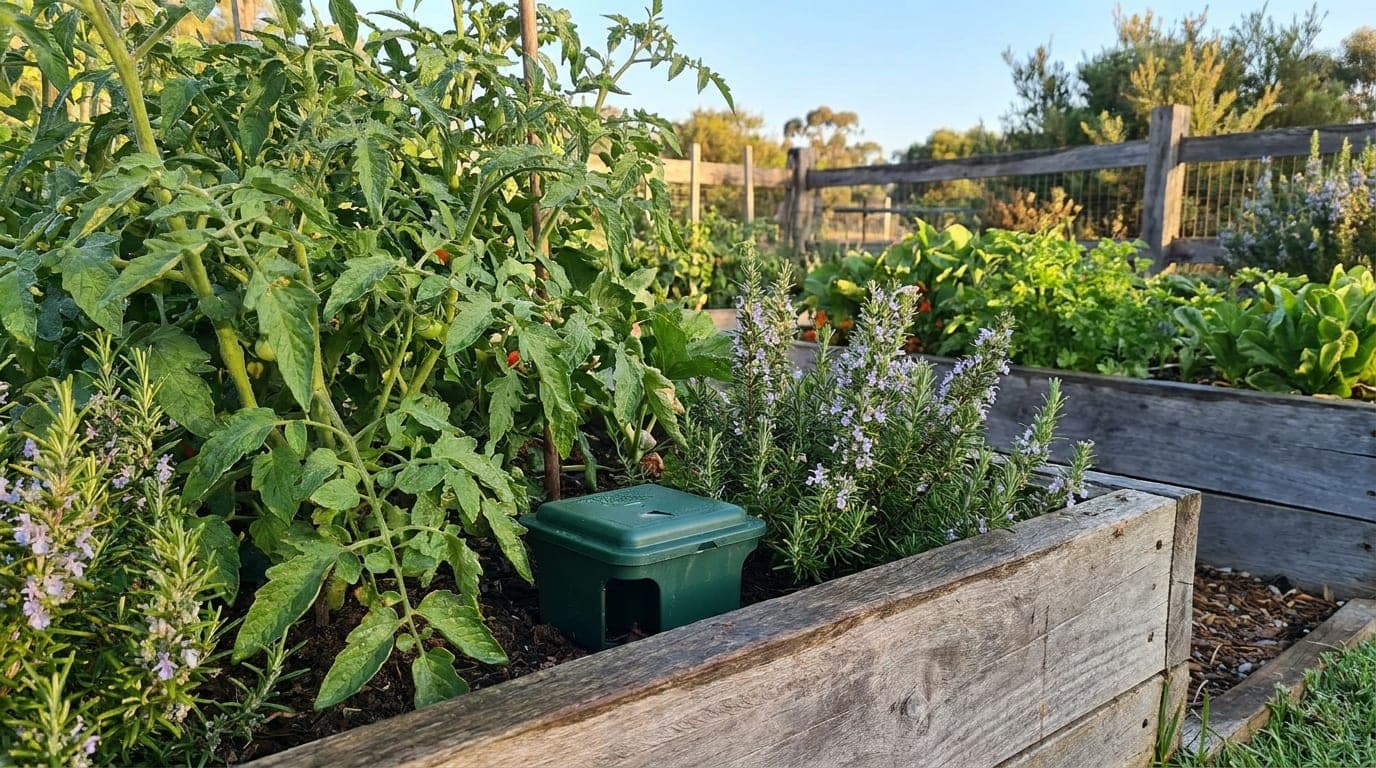
Termite baiting goes a step further on the low-exposure front. The bait sits inside tamper-resistant stations, either in the ground around the home or fixed over active workings, and uses an insect growth regulator in small quantities. Nothing is broadcast across your yard.
Neither method treats the inside of your home the way a general pest spray does. That is the key difference that reassures most Adelaide parents and pet owners.
The products and what low-toxicity means
The termiticides used in Australian barriers (the fipronil and imidacloprid families) are non-repellent, which is what lets termites walk through the zone and transfer the active back to the colony. Applied to soil, they bind and stay put rather than drifting indoors. Baits use growth regulators that stop termites moulting, which is specific to insects that shed an exoskeleton.
Low-toxicity does not mean harmless in any quantity, and no reputable technician will pretend otherwise. It means that, applied correctly and to the right places, the exposure to your household is very low. The Australian Pesticides and Veterinary Medicines Authority (APVMA) registers the products used, and licensed operators apply them to label.
Re-entry, drying times and sensible precautions
For most jobs there is little or no need to leave home. Where a technician drills and treats an interior penetration or a wet area, they will nominate a short drying period to keep that spot clear. Baiting needs no evacuation.
The practical precautions are simple:
- Keep children and pets away from a freshly treated zone or a wet application until the technician says it is dry.
- Do not let dogs dig up in-ground bait stations. If your dog is a digger, tell the operator so stations go in out of reach.
- Keep pets off any drilled and patched areas until the patching has set.
Why pet-conscious homes often choose baiting
If low chemical exposure is your priority, baiting is usually the better fit, and it is the honest recommendation for a lot of Adelaide households with young children, dogs, cats or productive vegetable gardens. It uses a fraction of the chemical of a full barrier and keeps it contained. The trade-off is that baiting works more slowly on an active colony, so a technician may treat active workings directly first for faster relief. If a low-tox approach matters to you across the board, our eco-friendly pest treatment page explains how the same thinking applies to general pests.
One Adelaide-specific note: homes on the leafy eastern and Hills fringes where families grow their own veg are exactly where we see baiting chosen most, precisely so the treatment stays clear of the garden beds.
The bottom line for your family
The biggest safety mistake we see is not the treatment, it is a homeowner spraying an active termite lead themselves with a supermarket product before calling anyone. That both scatters the colony and puts a repellent chemical where you actually live. The safer path is to leave active termites alone and get a licensed technician to assess and treat them properly.
When you enquire, tell us you have children, pets or an edible garden. We will factor that in when we match you with a licensed local technician, and they will walk you through the product and precautions for your home. Learn more about termite treatment and what to expect before you book.
Ready to get quotes from licensed technicians?
Tell us about your problem and we match you with a vetted local operator. Free, no obligation.
Get free quotesFrequently asked questions
Usually not for long. A soil barrier is applied outside and under the home, and a licensed technician will advise a short drying period for any treated interior penetration. Baiting needs no evacuation at all. Confirm the specifics with the operator.
The bait sits inside tamper-resistant in-ground stations designed to keep pets out, and it uses a growth regulator in small amounts. Keep your dog from digging up stations and follow the technician's placement advice. Tell them where your pets spend time so stations go in sensibly.
Baiting, because it uses far less chemical than a soil barrier and contains it in sealed stations. If you grow vegetables close to the house, mention it so the licensed technician we connect you with can plan placement around your beds.
Soil termiticides bind to the soil and are not designed to move into your living space. Once applied and settled they stay in the treated zone. A licensed technician explains the product and any precautions for your specific home.