Termite Baiting Systems Explained: Do They Work?
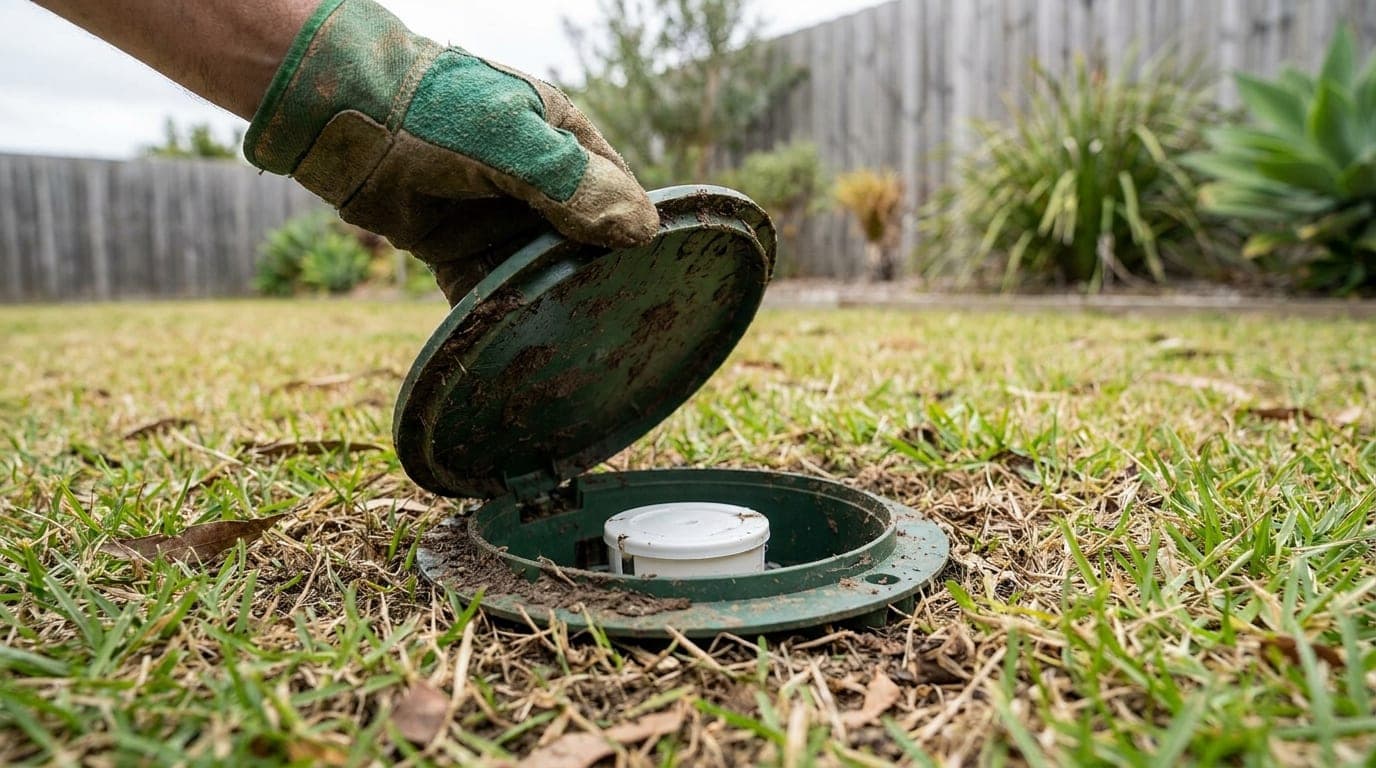
Termite baiting systems work by using in-ground stations to lure worker termites onto a slow-acting bait, which they carry back to wipe out the colony over 3-6 months.
Key takeaways
- Baiting stations are installed around the home's perimeter and checked on a schedule, usually every 4-8 weeks, until activity is confirmed
- The active ingredient is a slow-acting insect growth regulator, so termites share it through the colony before they realise anything is wrong
- Colony elimination typically takes 3-6 months, slower than a chemical barrier but effective even when the nest location is unknown
- Baiting suits homes where trenching a full chemical barrier is impractical, such as on a concrete slab, over a rock ledge, or close to a bore
- Ongoing monitoring is a subscription-style cost, not a one-off, so ask what the annual station-check fee covers before you sign
Termite baiting systems work by placing bait stations in the soil around a home, letting foraging termites feed on a slow-acting toxicant, and relying on those termites to carry it back to the nest and share it with the colony. Done properly, this eliminates the colony over 3 to 6 months rather than just repelling termites at the boundary.
What a termite baiting system actually is
A baiting system is a network of small plastic stations, usually spaced 2 to 3 metres apart, sunk into the ground around the perimeter of a house. Each station holds a cellulose bait matrix laced with a chitin synthesis inhibitor, an active ingredient that stops termites moulting properly. Termites cannot detect it as a threat because it does not kill on contact. They feed on it, return to the nest, and pass it on through grooming and trophallaxis (the exchange of food between colony members), so the effect spreads through the whole population rather than just the individuals that fed directly.
This is fundamentally different to a chemical barrier treatment, which creates a continuous treated zone in the soil that termites cannot cross undetected. Baiting does not stop termites entering the property zone at all. It is designed to find and remove the colony that is already active nearby.
Why baiting suits some Adelaide homes better than a barrier
Adelaide's housing stock is not uniform, and that matters more than most listicles let on. A lot of the older bungalows through Unley, Goodwood and the inner east sit on solid brick footings with minimal subfloor access, which makes a full trenched chemical barrier awkward without partial excavation. Newer builds on a concrete slab across the northern suburbs and Mawson Lakes often have no accessible soil perimeter at all without cutting into paths or garden beds.
Baiting sidesteps a lot of that. Stations go into garden beds, along fence lines, or wherever soil is exposed, without needing a continuous trench under paving or a slab edge. That is also why it is the more practical starting point for homes near a rainwater tank, a bore, or a retaining wall where drilling and trenching for a barrier gets complicated fast. The trade-off is time. Where a properly installed barrier can stop termite entry from day one, a baiting programme is working on colony biology, which does not move at the pace homeowners often expect.
What the installation and monitoring process looks like
Installation itself is quick, usually done in a single visit. The slower part is the monitoring, and this is where baiting systems get judged fairly or unfairly.
- Stations are installed around the structure, generally following the same spacing regardless of house size
- The technician checks each station on a set interval, commonly every 4 to 8 weeks in the first year
- Any station showing termite activity gets the bait cartridge swapped in for the active toxicant
- Feeding is monitored until activity stops, which signals the colony has been affected
- Stations are left in the ground afterward for ongoing detection, not removed
If you want to understand how termite treatment works as a category before deciding between methods, that comparison is worth reading first, because baiting is one tool among several, not a universal replacement for barrier or dusting treatments.
Cost and the subscription reality
Baiting is usually quoted with two separate numbers: an installation cost and a recurring monitoring fee. Homeowners who only budget for the install are the ones who feel blindsided a year later. The monitoring fee pays for the technician's time checking every station, refreshing bait, and documenting activity, which is the entire mechanism that makes baiting work. Skip the monitoring and you have buried plastic tubes doing nothing.
Get a clear, itemised figure for both numbers before agreeing to anything, and confirm what happens if activity is found between scheduled visits. For a full breakdown, see how termite baiting system cost and ongoing monitoring fees actually break down across a typical Adelaide block.
Choosing between baiting and a barrier
Neither method is automatically better. The right call depends on the home's construction, the soil access available, whether termites have already been found, and how quickly you need protection in place. A barrier vs baiting comparison sets out the decision factors side by side, and it is worth working through before you commit to either, because switching methods mid-programme costs more than choosing correctly the first time.
If you are still working out which approach fits your specific property, the termite treatment method selector tool walks through the same questions a technician would ask on-site, and gives you a starting recommendation before anyone visits the house.
The bottom line on baiting systems
Baiting is a genuine, well-established termite management method, not a lesser alternative to a barrier. It earns its place on homes where trenching is impractical, where the goal is colony elimination rather than perimeter exclusion, or where ongoing monitoring fits how the homeowner wants to manage long-term risk. It is not the faster option, and it is not free to maintain. Understood correctly, it does exactly what it is designed to do.
We connect Adelaide homeowners with licensed technicians who can assess a property and recommend the method suited to that specific home, not a default. If baiting looks like the right fit after reading this, request a termite treatment assessment and the licensed technician we match you with will confirm it on-site.
For background on the biology behind why bait transfer works, the CSIRO's termite research overview is a solid independent reference on colony behaviour and foraging patterns.
Ready to get quotes from licensed technicians?
Tell us about your problem and we match you with a vetted local operator. Free, no obligation.
Get free quotesFrequently asked questions
Most colonies feeding on a baiting station show a measurable population drop within 3 to 6 months. Some slow-feeding colonies in cooler months take longer, which is why the licensed technician keeps checking stations rather than declaring the job done after one visit.
Both are proven termite management methods, they just solve different problems. A chemical barrier stops termites entering through the treated soil, while baiting aims to eliminate the colony itself. Many Adelaide homes end up using both at different points in their protection plan.
Yes. Baiting is a managed system, not a set-and-forget install. The technician replaces bait, checks for activity, and reports findings on a recurring schedule, and that monitoring fee is usually separate from the initial installation cost.
No. Termites forage across a wide underground territory regardless of whether stations are present. The stations simply intercept termites already moving through the soil near your home and give the licensed technician a way to detect and act on that activity early.