Why Adelaide Hills Homes Get More Termite Pressure
Adelaide Hills termites are more common because of high rainfall, dense bushland, retaining walls and older timber homes. Here is why, and what actually helps.
Key takeaways
- Higher rainfall and heavier clay soils in the Hills keep the ground damp for longer, which is exactly the moisture gradient termites follow toward a house
- Established bushland and remnant native forest around suburbs like Stirling, Aldgate and Bridgewater sit termite colonies close to residential blocks
- Retaining walls and split-level foundations, common on sloped Hills blocks, create hidden timber-to-soil contact points that are easy to miss in a visual check
- Older Hills homes with stone or brick construction over timber subfloors are harder to inspect and often go longer between checks than newer Adelaide plains builds
Adelaide Hills homes face more termite pressure than most of the Adelaide plains because the region combines the 3 conditions termites need most: reliable moisture, established timber to feed on, and older housing stock with more places for a colony to enter unseen. Higher rainfall, clay-heavy soils and bushland proximity all compound the risk.
Why rainfall and soil type matter more here than anywhere else in Adelaide
The Adelaide Hills receives noticeably more rainfall than the coastal plain and CBD fringe, and that difference matters more than most homeowners realise. Termites are moisture-dependent insects. Subterranean species, the most common and most destructive group found in South Australia, need a damp, buffered environment to survive the trip between their underground nest and a timber food source. A drier suburb dries out fast after rain and cuts that supply line. A Hills property with heavier clay soil retains water for days longer, keeping the ground softer and the moisture gradient intact right up to a stump, retaining wall or subfloor bearer.
This is the detail most general pest advice misses: it is not just "more rain equals more termites" in a vague sense. It is that clay soil in suburbs like Crafers, Aldgate and Uraidla holds water at the surface for longer stretches, which extends the window a colony has to forage without drying out and retreating. On the plains, sandier soils drain faster and interrupt that window more often.
Bushland proximity puts established colonies closer to your house
Much of the Hills sits against remnant native forest, conservation parks, or large blocks with mature trees and fallen timber left to break down naturally. That is exactly the environment a subterranean termite colony thrives in undisturbed for decades. When a residential block borders bushland, or was carved out of it within the last few decades, the home is not introducing termites to the area. It is sitting inside territory a colony already occupies.
This is different to the risk profile on the Adelaide plains, where you will find termites in Adelaide across suburbs and home types more evenly, largely tied to age of construction and moisture around the home rather than adjacency to a food source that has been there longer than the house has.
Retaining walls and split-level blocks hide the entry points
Here is the local detail most Adelaide pest content skips entirely: Hills blocks are frequently sloped, and sloped blocks mean retaining walls, cut-and-fill foundations and split-level subfloors. A timber retaining wall holding back an embankment is in permanent contact with damp soil on one side. A stepped foundation on a split-level home creates multiple separate subfloor voids instead of one continuous, easily inspected space.
The mistake we see homeowners make constantly in the Hills is treating a visual walk around the perimeter as a substitute for a proper inspection. A retaining wall looks fine from the garden side. What matters is what is happening on the soil-contact side, and inside the subfloor cavity behind it, neither of which a homeowner check will ever cover. This is precisely the kind of access point a licensed technician is trained to probe and sound, not just look at.
If your home sits on a slope with any timber retaining structure, it is worth reading about how moisture, drainage and termites connect, because retaining walls are one of the most common moisture traps we see flagged during Hills inspections.
Older stone and brick homes with timber subfloors are harder to check
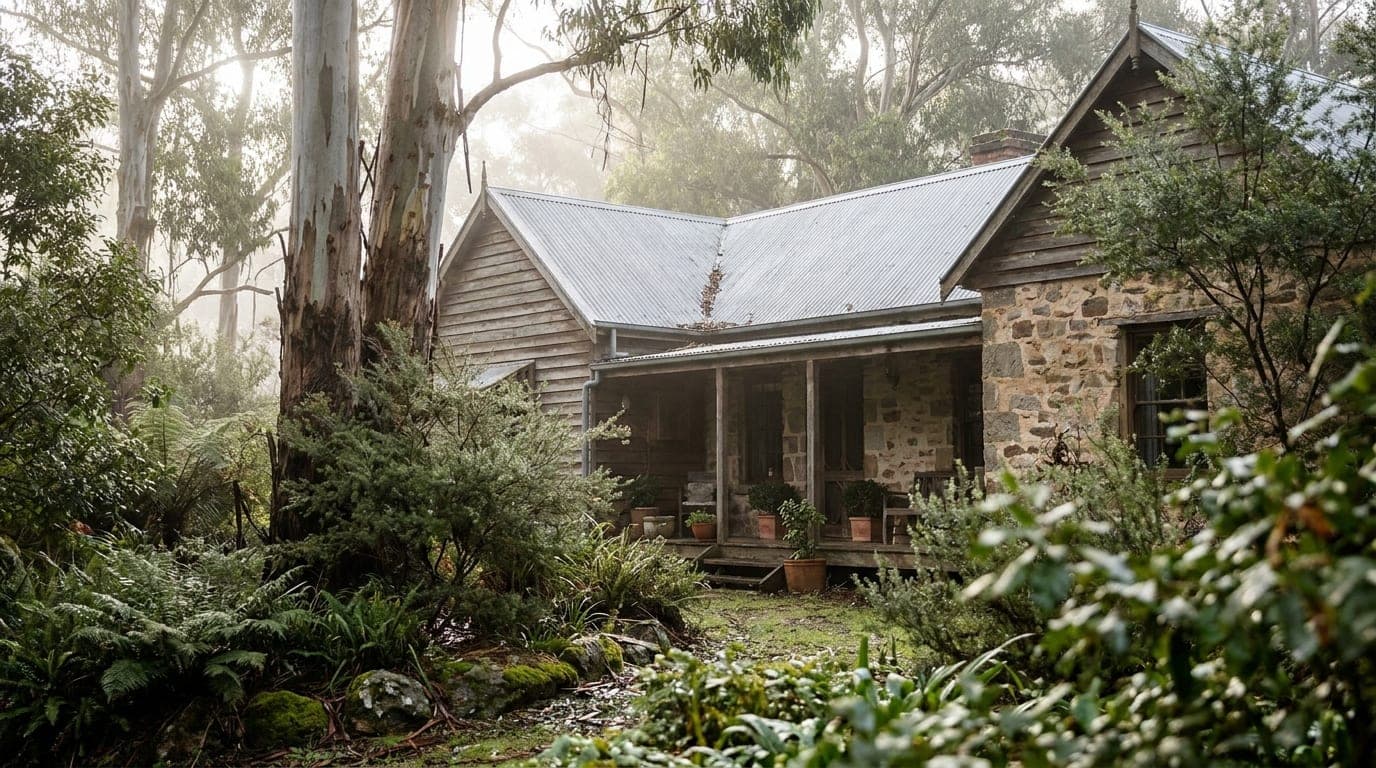
The Hills has a higher proportion of older character homes, stone cottages, and brick homes on timber stumps than newer estate suburbs. These homes were mostly built before modern termite management systems (physical or chemical barriers installed at construction) were standard practice. That means the only protection most of them have is whatever was retrofitted, if anything, plus regular inspection.
Subfloor access in older Hills homes is also frequently more restricted, tight crawl spaces, uneven stone foundations, low clearance under additions, which makes a thorough check take longer and matter more. Skipping a year because "nothing looked different" is a common and costly mistake, because visible signs like sagging skirting or blistered paint typically show up only after a colony has been established for a long time.
What actually reduces termite pressure on a Hills property
None of this means a Hills home is destined to get termites. It means the baseline risk is higher, so the response needs to match it:
- Get subfloor and retaining wall areas inspected specifically, not just a general walk-through
- Keep garden beds, mulch and firewood stacks clear of direct timber-to-soil contact near the house, a habit covered in more detail in landscaping and mulch mistakes that attract termites
- Address any subfloor moisture or drainage issue promptly rather than waiting for a visible sign
- Book more frequent checks if your block borders bushland or includes retaining structures
For guidance tailored to your soil type, slope and construction, how to prevent termites in your Adelaide home covers the practical prevention steps that apply across the region, with the Hills-specific factors above layered on top.
Getting the right technician for a Hills property
Not every pest technician has hands-on experience with sloped blocks, retaining walls and older stone construction, and that experience matters more in the Hills than almost anywhere else in metropolitan Adelaide. We connect Hills homeowners with licensed Adelaide technicians who know the local terrain, from Stirling to Mount Barker fringe properties, and who inspect the access points that generic pest advice does not mention.
If you are in the region, termite control is the starting point, and we also maintain a dedicated page for termite treatment in the Adelaide Hills with more on servicing this area specifically. According to the CSIRO, termites cause damage to a substantial proportion of Australian homes over their lifetime, and the risk is materially higher in high-rainfall, bushland-adjacent regions like the Adelaide Hills. Regular, properly targeted inspection is the single most effective way to catch a colony before it reaches structural timber.
Ready to get quotes from licensed technicians?
Tell us about your problem and we match you with a vetted local operator. Free, no obligation.
Get free quotesFrequently asked questions
Pressure is generally higher because of consistent rainfall, cooler damp microclimates and proximity to bushland, but termites are active across the whole Adelaide region. The Hills simply give colonies more of what they need: moisture and timber, in gardens, retaining walls and stumps.
Yes. Native forest and remnant bushland hold large, naturally occurring termite colonies feeding on fallen timber. A residential block bordering that bushland, or built where bushland was recently cleared, sits closer to an existing food source than a block in a cleared suburban estate.
Once a year as a baseline, though homes with retaining walls, subfloor timber, or a bushland boundary are often better served by an inspection every 6 to 12 months. The licensed technician we match you with can recommend a frequency based on your specific block.
You can watch for mud tubes and sagging skirting boards, but termites often travel through retaining walls, subfloor voids and stump cavities that are never visible from a casual walk around the house. A trained inspection checks the access points a homeowner would not think to look at.