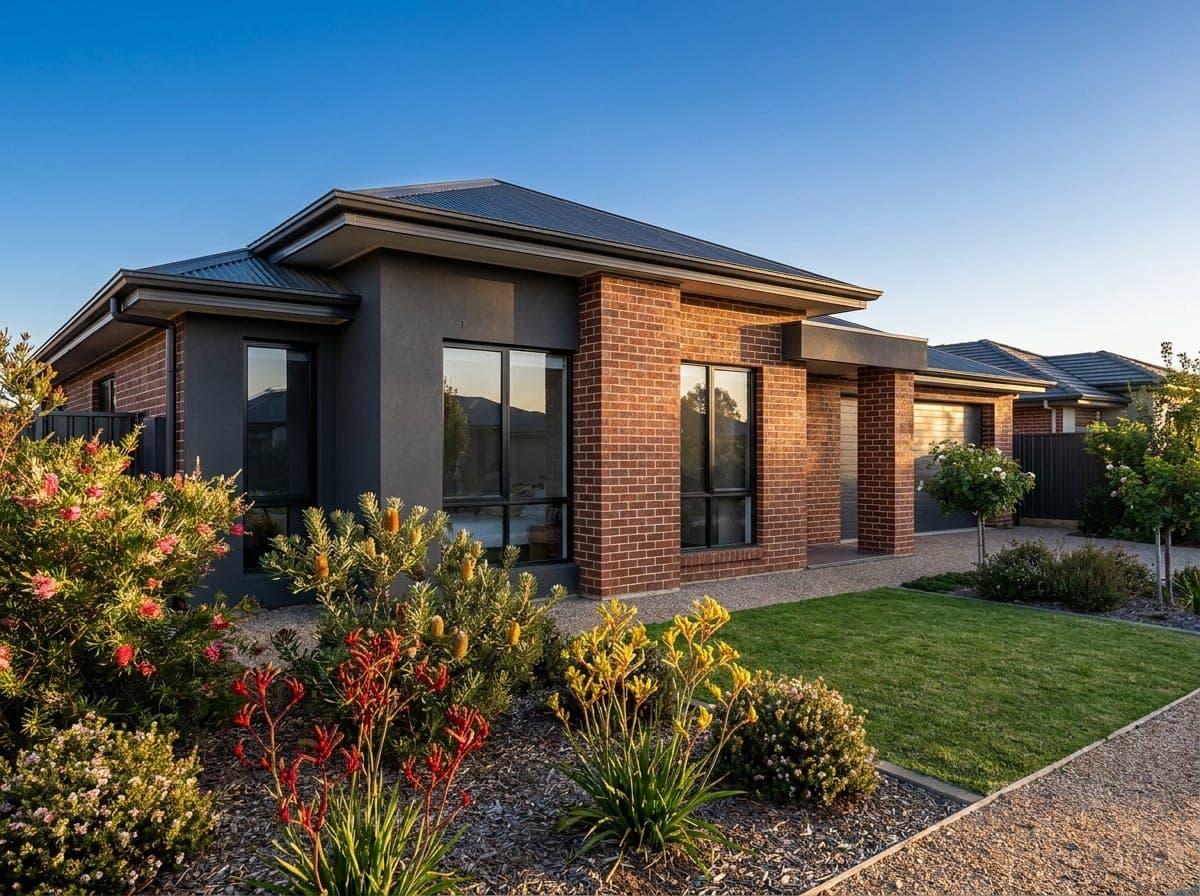
Subfloor Ventilation and Termite Risk in Older Adelaide Homes
Poor subfloor ventilation traps moisture under older Adelaide homes, creating the exact conditions termites need. Here is why it matters and what to check.
Key takeaways
- Poor subfloor airflow traps moisture against timber bearers and joists, and moisture is the single biggest driver of termite activity under a house
- Adelaide's older stone and brick homes on stumps were built with vent bricks sized for a different era, and renovations often block them without anyone noticing
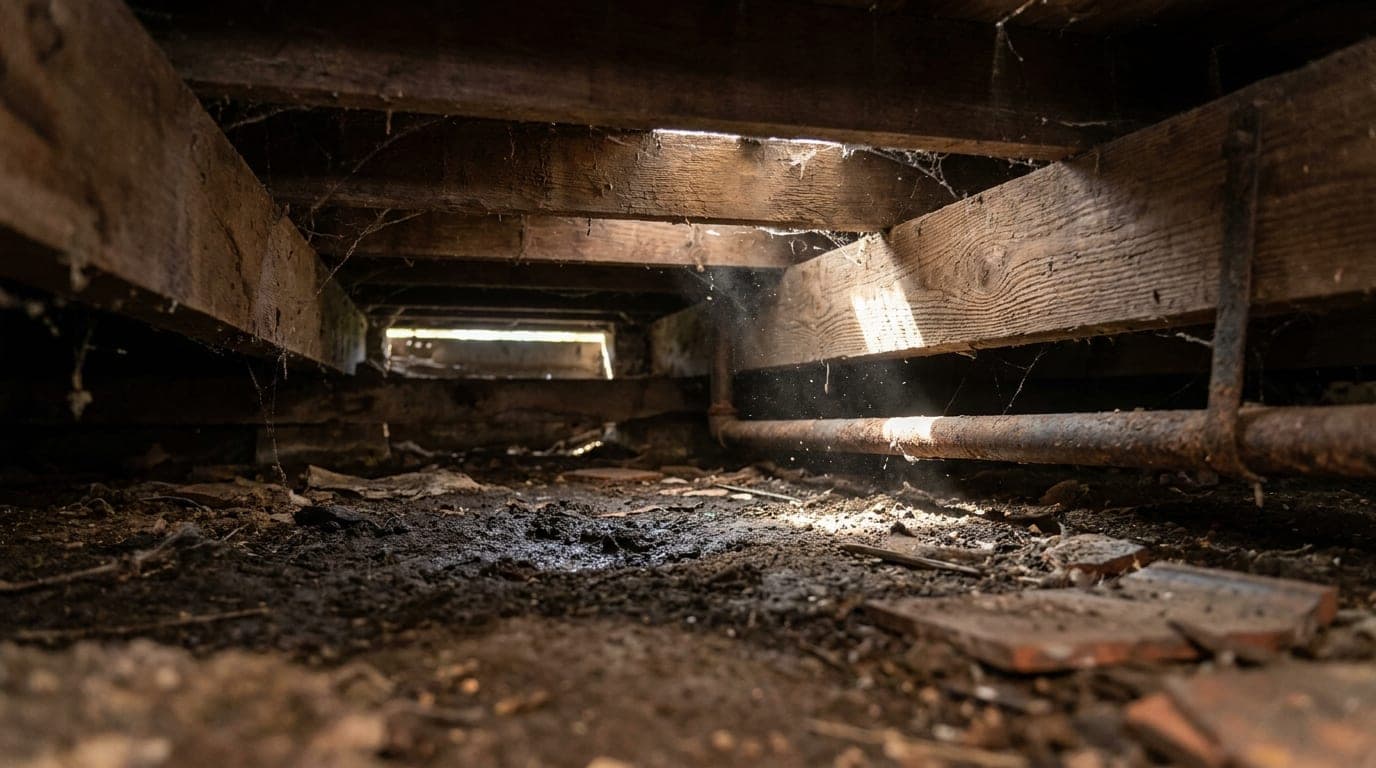
- A musty smell, condensation on subfloor timber, or damp soil under the house are signs airflow is failing well before termites ever show up
- Improving ventilation reduces risk but does not replace a physical or chemical termite barrier, the two work together, not as substitutes
Poor subfloor ventilation raises termite risk because it traps moisture against timber, and moisture is what makes timber attractive and easy for termites to attack
A stuffy, damp subfloor with blocked or undersized vents keeps bearers, joists and flooring timber consistently humid. Termites do not need dampness to find a home, but damp softened timber is easier to tunnel through and holds the humidity termite workers need to survive away from the soil. In Adelaide's older stump and low-set homes, this combination of ageing subfloor vents and decades of paving, decking and garden beds pushed up against the walls is one of the most common conditions the licensed technician we match you with finds during an inspection.
Why this matters more in Adelaide's older housing stock
Adelaide has an unusually high proportion of homes built between the 1900s and 1960s on timber stumps or low brick piers, particularly through the western suburbs, the inner south, and pockets of the Adelaide Hills. These homes were built with vent bricks sized to the standards of their era, spaced for a subfloor that was expected to stay clear. Two things have changed since then that most homeowners never connect back to ventilation.
First, driveways, paving and raised garden beds have crept up against the perimeter walls over decades of small renovations, burying or partially covering vents that used to sit clear of the ground. Second, retrofitted insulation, added decking, and enclosed verandahs have blocked cross-flow paths that relied on air moving from one side of the subfloor to the other. The vents are often still physically there. They are just no longer doing their job.
The specific mistake we see repeatedly in Adelaide subfloors
The most common and most avoidable issue is homeowners deliberately blocking vents to stop draughts in the room above, usually with foam, timber offcuts, or expanding sealant, without realising the subfloor needs that airflow far more than the living room needs the extra warmth. It is a well-intentioned fix that trades a minor comfort issue for a genuine moisture and termite risk, and it is one of the first things worth checking if a subfloor feels close and humid.
The second most common pattern is landscaping creep. A garden bed gets built up against a wall over a few seasons, a paved side path gets levelled and raised, or a new deck gets built flush with the ground rather than clear of it, and each of these quietly buries a row of vents that used to sit well above ground level. None of these renovations were done with termites in mind, and none of them look like a problem from the outside. The vent bricks are still visible in the wall, they are just no longer connected to open air on the outside, which is easy to miss unless someone is specifically looking for it.
How to tell your subfloor ventilation is inadequate
A few practical signs point to airflow problems before termites are ever in the picture.
- A musty or earthy smell noticeable at floor vents or through floorboards, especially after rain
- Visible condensation or beading on the underside of subfloor timber
- Soil in the subfloor that stays visibly damp days after rain rather than drying out
- Mould or dark staining on the underside of bearers and joists
- Vents that are painted over, rendered shut, or blocked by external paving and garden beds
If several of these show up together, it is worth having airflow properly assessed rather than only checking for signs of termites after the fact. For background on how moisture and termite activity are connected more broadly, see moisture, drainage and termites.
What good subfloor ventilation actually requires
The Australian Building Codes Board sets a practical benchmark: a minimum ventilation opening of around 6,000 square millimetres per metre of external wall, or roughly 1 percent of the enclosed subfloor area, with vents distributed for genuine cross-ventilation rather than clustered on one elevation (further detail on subfloor ventilation and condensation management is available through the Australian Building Codes Board). In practice, this means:
- Vents on opposing or multiple walls, not just the street-facing side
- Nothing (paving, mulch, garden beds, stored items) sitting within the clear airflow path of a vent
- Consideration of mechanical subfloor ventilation fans where the block's slope, soil type or building footprint restricts natural cross-flow, which is common on the tighter, flatter blocks found in suburbs like Woodville or Enfield
Where natural ventilation genuinely cannot meet these numbers because of a home's footprint or a neighbouring building hard up against a boundary wall, a mechanical extraction system is usually the more reliable fix than adding vents that cannot achieve real cross-flow.
It is worth noting that adding vents is not always as simple as knocking a new opening into an existing wall. Older Adelaide homes often have solid stone or double-brick perimeter walls where a new vent needs to be cut and lined properly to avoid compromising the wall's structure, which is a job for a licensed builder or technician rather than a weekend project.
Ventilation reduces risk, it does not replace a termite barrier
This is the point homeowners most often get backwards. Fixing airflow is genuine risk reduction, not termite prevention on its own. Adelaide's clay-heavy soils in areas like Adelaide Hills already push moisture and termite activity higher than the sandier coastal suburbs, a pattern covered in more detail in why Adelaide Hills homes get more termite pressure. A dry, well-ventilated subfloor is a harder environment for termites to establish and stay hidden in, but it does nothing to physically stop a colony entering through a slab penetration, weep hole, or gap in an existing barrier.
The two measures work together. Ventilation removes the moisture that makes a subfloor an appealing, easy place to operate. A physical or chemical barrier, or a properly maintained baiting station network, addresses the actual entry point. Relying on one without the other leaves a genuine gap, particularly in a stumped 1920s or 1950s home where both problems (poor airflow and an ageing or absent barrier) tend to show up at the same time.
If you are noticing signs of a damp or blocked subfloor, the practical first step is getting it assessed alongside a termite check rather than treating them as separate jobs. We connect you with licensed Adelaide technicians through our termite control service, and where bait stations are already part of a property's protection plan, ongoing termite baiting monitoring can flag moisture-related activity early, before it reaches structural timber.
Ready to get quotes from licensed technicians?
Tell us about your problem and we match you with a vetted local operator. Free, no obligation.
Get free quotesFrequently asked questions
Not directly, termites do not need bad airflow to exist. What poor ventilation does is raise moisture levels in subfloor timber, and damp timber is far more attractive and easier to attack than dry timber. It also slows the evaporation of any plumbing leak or rising damp, extending the window termites have to move in undetected.
As a general guide, the Australian Building Codes Board recommends a minimum ventilation opening equivalent to 6,000 square millimetres per metre of wall, or approximately 1 percent of the enclosed subfloor area, with vents positioned to allow cross-flow rather than sitting all on one side of the house.
Clearing debris, trimming plants back from existing vents, and removing obvious blockages are reasonable DIY jobs. Adding new vents, installing mechanical extraction fans, or assessing whether ventilation is adequate for your specific subfloor should go through a licensed technician, since undersized or badly placed vents can leave the moisture problem largely unsolved.
Both. Damp subfloors cause timber decay and mould regardless of termites, but from a termite perspective the moisture is what makes timber palatable and easy to hollow out. A dry subfloor will not stop a determined termite colony from entering through a barrier gap, but it removes one of the main reasons they would want to stay.