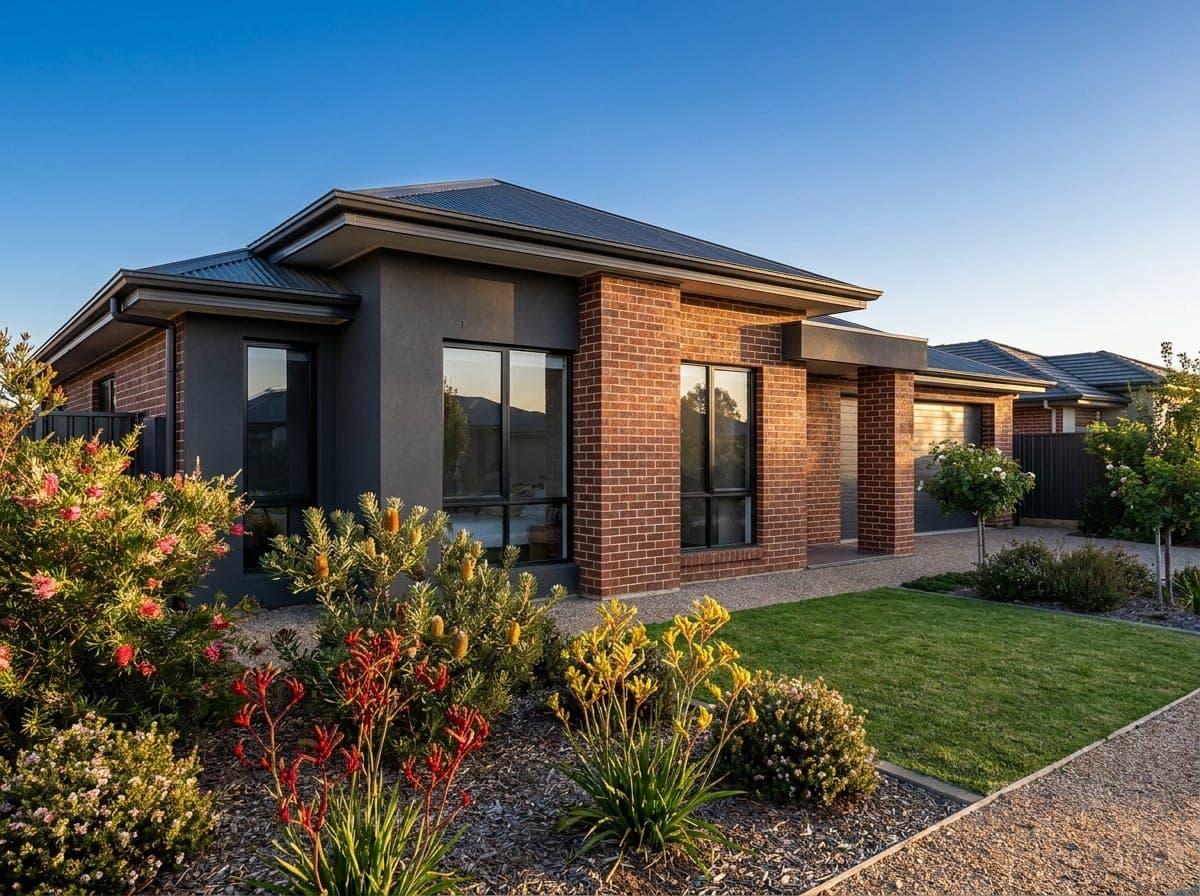
Termite Reticulation Systems: Built-In Protection for New Builds
A termite reticulation system is a network of pipes under the slab that lets a technician re-dose chemical without digging. Here is how it works in Adelaide new builds.
Key takeaways
- A reticulation system is a grid of perforated pipes cast into the slab edge during construction, connected to accessible above-ground points.
- It lets a licensed technician re-inject termiticide every 5 to 8 years without excavating around the footings.
- It only protects what it was designed to protect: the slab perimeter it was installed under, not gaps created by later renovations.
- Retrofitting reticulation into an existing Adelaide home is possible but far more invasive and expensive than installing it during the slab pour.
- Reticulation is a delivery method, not a treatment in itself. It still needs a licensed technician to charge it with chemical on a schedule.
A termite reticulation system is a grid of perforated pipes cast into the ground around a slab's perimeter during construction, linked to accessible service points so a licensed technician can re-inject termiticide every 5 to 8 years without digging. It is the standard way new-build Adelaide homes get long-term chemical protection without repeat excavation.
What a reticulation system actually is
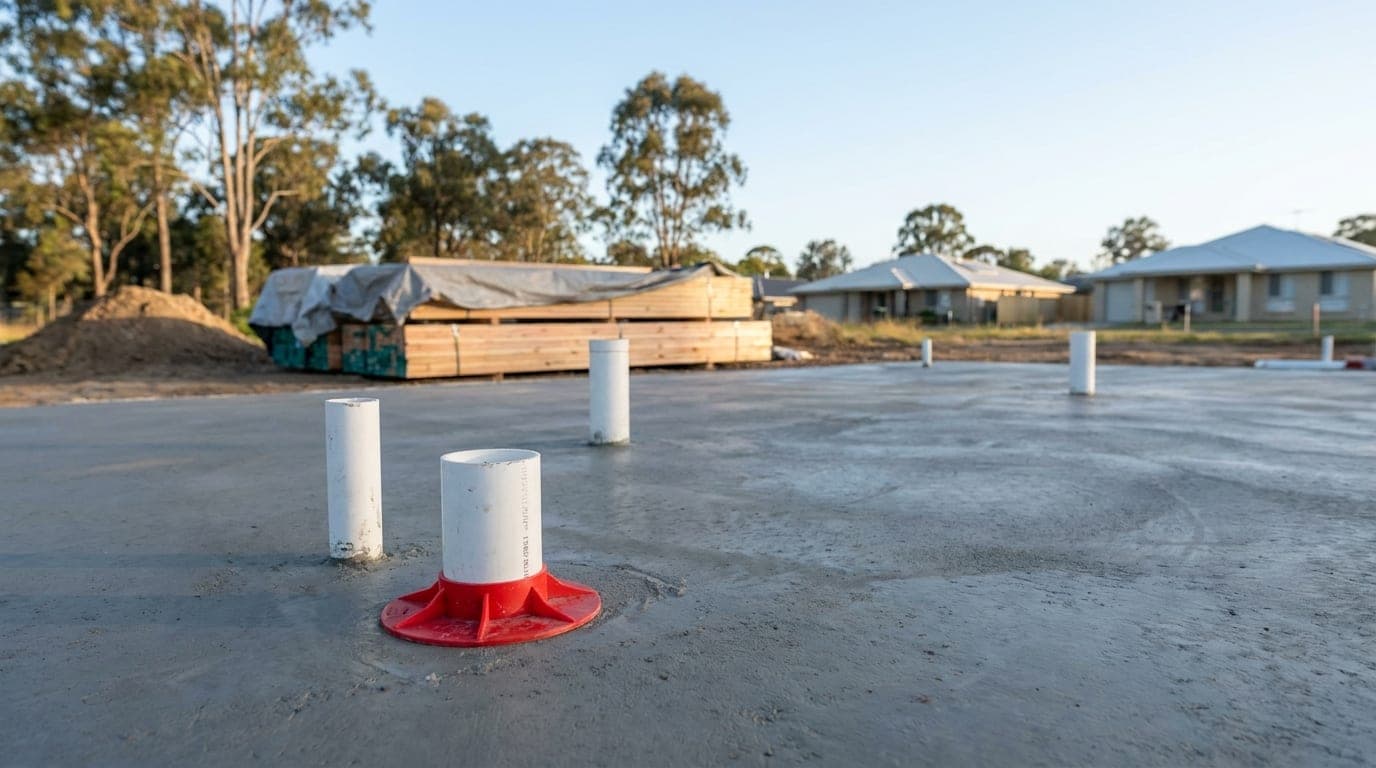
Picture a loop of slotted pipe running just outside the footing, buried at the time the slab goes down, capped off at a handful of points that stay accessible after landscaping is finished (usually near a downpipe, a side path, or tucked against the meter box). Those points are where the system earns its keep. Instead of a technician trenching along the foundation every time the chemical barrier needs renewing, they connect a pump to the service point and push termiticide straight through the buried pipe network into the soil profile.
It is plumbing, essentially, but for poison instead of water. The pipe itself does nothing to a termite. It is purely the delivery mechanism that makes future dosing fast and non-invasive.
Why builders install it at slab stage, not later
The entire value proposition of reticulation depends on timing. The pipe has to go in before the concrete does, because once a slab is poured you cannot retrofit a buried grid without cutting into what you just built. That is why reticulation shows up almost exclusively on new builds and major extensions in growth corridors like Angle Vale, Blakeview and Mount Barker, where slabs are being poured fresh and the marginal cost of adding pipe during the pour is small.
On an established home with a slab that has already cured, adding reticulation means trenching the full perimeter from outside, which is close to a full excavation and rarely cheaper than a conventional chemical barrier treatment applied through drilling and injection. If your home is already standing, chemical soil barrier treatment is almost always the more sensible path, and the chemical barrier treatment service exists for exactly that scenario.
The Adelaide-specific detail builders skip past
Here is the part display-home brochures gloss over: reticulation only protects the section of slab edge the pipe was actually run under. On a lot of Adelaide's newer developments, that means the original footprint, full stop. Every alfresco extension, granny flat, or slab-on-ground shed added after handover sits outside the pipe loop entirely, because nobody re-runs reticulation for a later addition. I have seen otherwise well-protected new builds in outer northern suburbs develop an entry point precisely where a homeowner poured a small slab extension two years after settlement and assumed the whole property was still covered by the system disclosed at contract signing.
If you have added any concrete to a reticulated home since it was built, that new section needs its own protection plan. It is not covered by the original loop, and it is worth flagging explicitly with whoever inspects the property annually.
Reticulation versus other Adelaide construction methods
New builds across South Australia are required to have a termite management system under the National Construction Code, but reticulation is only one way to satisfy that requirement. A slab can instead rely on physical barriers (stainless steel mesh or graded particle systems) or a chemically treated zone laid down once at construction with no ongoing re-dosing points at all. Reticulation is the option that trades a slightly higher upfront installation cost for cheaper, less disruptive maintenance over the following decades.
For a homeowner comparing options at contract stage, or trying to understand what a display village sales consultant meant by "chemical system installed", it helps to read up on what new build termite protection actually requires under SA regulations before assuming reticulation is the only compliant path.
Servicing an existing reticulation system
If you have bought a home that already has reticulation installed, the practical question is not whether it works but when it was last charged. Termiticide breaks down in soil over time, and the whole point of the pipe network is that recharging is simple, so there is no excuse for it lapsing. A licensed technician can locate the service points, test remaining chemical concentration, and recharge the system as part of a standard termite control visit.
Ask the seller's agent or the previous owner for any documentation showing the installation date and last recharge. If nobody can produce it, treat the system as due for a check regardless of how new the house looks. A reticulation grid with expired chemical in it is just an empty pipe.
What reticulation does not cover
It bears repeating because it is the single most common misunderstanding: reticulation protects the soil barrier at slab level. It does nothing for termites entering through a roof void, a garden retaining wall touching untreated timber, or a timber deck bridging the barrier entirely. The CSIRO's guidance on termite management in Australian homes is a useful independent reference here, and it is consistent on this point: subterranean barriers (reticulated or not) are one layer of a broader management approach, not a replacement for routine visual inspection.
That means a reticulated home still needs the same annual eyes-on check as any other property. Ask the technician who services your system to also walk the roof void and subfloor while they are there, since the callout is already booked.
Getting reticulation assessed or serviced
Whether you are buying a home with an existing system, building new and weighing up your options against a builder's default spec, or simply unsure whether your reticulation is still doing its job, the starting point is the same: get a licensed technician to physically locate the service points and test the barrier. We connect Adelaide homeowners with the licensed technicians who carry out that assessment, and who can recharge or repair a reticulation system as part of a standard termite treatment booking.
Ready to get quotes from licensed technicians?
Tell us about your problem and we match you with a vetted local operator. Free, no obligation.
Get free quotesFrequently asked questions
It is a network of perforated pipes installed under and around a slab during construction, connected to service points above ground. A licensed technician uses these points to pump termiticide into the soil without digging up the foundation, which makes re-treatment far less disruptive over the life of the home.
It is possible but rarely worth it. Retrofitting means trenching around the entire slab perimeter to lay pipe, which is disruptive and costly compared with a chemical barrier applied from outside. Most established Adelaide homes are better served by a standard barrier treatment.
Most termiticides used in reticulation systems are rated for 5 to 8 years before they need topping up, though this varies by product and by how much rainfall and soil disturbance the property has seen. The technician who installed or last serviced the system will confirm the correct interval.
No. Reticulation protects the chemical barrier around the slab, not the parts of the home above it. Roof voids, timber cladding and garden beds still need an annual inspection regardless of what is running under the floor.